What Is Orthodontic Treatment?
Orthodontic treatment uses specialized appliances to gently move your teeth and jaws into better alignment over time. From crowding and gaps to overbites and crossbites, today’s types of orthodontic treatments give you real options for a healthier, more confident smile.
Unlike general dentists, orthodontists complete an additional two to three years of specialized residency training focused exclusively on tooth movement and jaw alignment. This advanced education, which includes board certification through the American Board of Orthodontics, allows them to diagnose complex bite issues and create treatment plans built around each person’s specific case, whether they’re a child, teen, or adult.
Orthodontics has come a long way from the bulky metal braces of the past. Today, you can choose from nearly invisible aligners, tooth-colored brackets, and advanced bracket systems that work faster and more comfortably than older systems. Every treatment option available is designed to fit your lifestyle, budget, and smile goals.
The best part? You don’t have to guess which treatment is right for you. A free consultation gives you the chance to explore your options and get a recommendation based on your specific needs.
How Do the Different Types of Orthodontic Treatments Work?
The main types of orthodontic treatments available today include metal braces, clear (ceramic) braces, clear aligners like Invisalign, palatal expanders, space maintainers, and jaw correction orthodontics. The appliances differ, but the principle is the same: consistent, gentle pressure guides teeth into better positions. Let’s break down each one.
What Are Metal Braces?
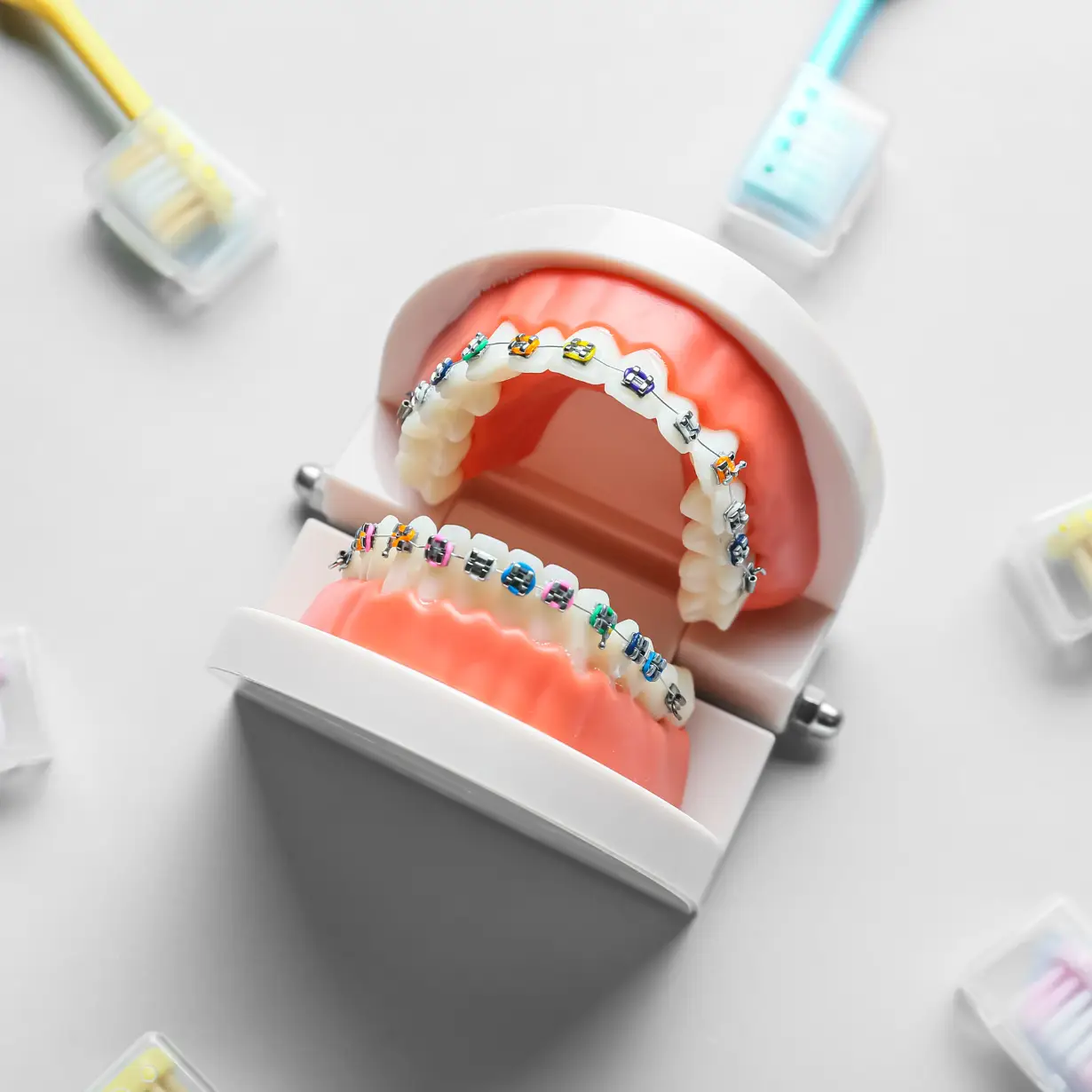
Metal braces remain the most versatile orthodontic treatment available. They consist of three main components: stainless steel brackets bonded to each tooth, an archwire that connects the brackets, and small elastic bands that hold everything in place.
Your orthodontist adjusts the archwire at regular appointments, gradually guiding your teeth into alignment. Metal braces can correct virtually any orthodontic issue, from mild crowding to complex bite corrections.
How Do Clear Braces Work?
Clear braces work exactly like metal braces but use tooth-colored or translucent ceramic brackets instead of stainless steel. The mechanics are identical. Brackets attach to your teeth, an archwire applies pressure, and elastics secure the wire.
The biggest advantage is that clear braces blend in with your smile, making them far less noticeable during treatment. They’re a popular choice for adults and teens who want effective results without the metallic look.
What Is Invisalign?
Invisalign takes a completely different approach. Instead of brackets and wires, you wear a series of custom-made, removable clear trays. Each set of aligners shifts your teeth slightly, and you switch to a new set every one to two weeks.
Because the trays are nearly invisible and removable, you can eat whatever you want and maintain your normal brushing routine. Invisalign works well for mild to moderate orthodontic cases and fits seamlessly into your lifestyle.
What Are Palatal Expanders?
Palatal expanders widen the upper jaw to create more space for teeth. They’re most commonly used in Phase 1 early interceptive treatment for children whose jaws are still developing.
The device attaches to the upper molars and includes a small screw that you turn at home according to your orthodontist’s instructions. Over several weeks, the expander gradually widens the palate, which can prevent crowding and reduce the need for tooth extractions later.
What Do Space Maintainers Do?
When a child loses a baby tooth too early, the surrounding teeth can drift into the empty space. Space maintainers hold that gap open until the permanent tooth is ready to come in.
These simple appliances prevent crowding and misalignment that would otherwise require more extensive treatment down the road. Think of them as placeholders that save you time and money later.
When Is Jaw Correction Orthodontics Needed?
For severe skeletal discrepancies that appliances alone can’t fix, jaw correction orthodontics combines orthognathic treatment (surgical jaw repositioning) with metal braces or aligners. This approach is typically reserved for adults whose jaws have stopped growing and who have significant bite or facial asymmetry issues. Your orthodontic care team will walk you through every step if this type of treatment is recommended.
What Are the Benefits of Today’s Orthodontic Treatment Options?
The main benefits of modern orthodontic treatment include shorter treatment times, improved comfort, discreet options, and better oral health outcomes. Technology has advanced significantly, giving you more choices and better results than previous generations had.
How Do Modern Options Improve Aesthetics and Comfort?
- Discreet appearance during treatment. Clear aligners and tooth-colored brackets let you straighten your teeth without everyone noticing. You can smile confidently throughout the entire process.
- Greater comfort. Today’s brackets are smaller than they used to be, wires are heat-activated for gentler pressure, and aligner edges are smooth. Most people are surprised by how comfortable modern treatment feels.
- Shorter treatment times. Advanced bracket systems and digital treatment planning often reduce how long you need to wear braces or aligners. Many people finish faster than they expected.
Can Straighter Teeth Improve Your Oral Health?
- Easier cleaning and fewer cavities. Straighter teeth are easier to clean, which reduces the risk of tooth decay and gum disease. Proper alignment also prevents uneven wear on your teeth over time, protecting them for years to come.
- Options for every age. Children, teens, and adults all have treatment options designed for their stage of life. A healthy smile starts early, but it’s never too late to improve your bite.
- Flexible daily routine. Removable aligners let you eat what you love and keep up your regular oral hygiene routine without extra hassle. That kind of flexibility matters when treatment lasts a year or more.
How Do Metal Braces, Clear Braces, and Invisalign Compare?
Choosing the right treatment depends on your specific needs, lifestyle, and budget. Here’s how the three most popular types of orthodontic treatments stack up:
| Feature | Metal Braces | Clear Braces | Invisalign |
|---|---|---|---|
| Visibility | Most noticeable | Less noticeable (tooth-colored) | Nearly invisible |
| Removability | Fixed (not removable) | Fixed (not removable) | Removable for eating and brushing |
| Comfort | Mild adjustment discomfort | Similar to metal braces | Smooth edges, generally comfortable |
| Treatment Range | All cases, including complex | All cases, including complex | Best for mild to moderate cases |
| Typical Duration | 12–24 months | 12–24 months | 12–18 months for most cases |
| Maintenance | Requires careful brushing around brackets | Same as metal braces | Remove trays to brush normally |
| Relative Cost | Most affordable option | Slightly higher than metal | Typically highest cost |
Which Option Is Right for You?
Metal braces are the most versatile choice, handling everything from simple spacing issues to complex bite corrections. If cost is a priority or you have a complicated case, metal braces deliver reliable results.
Clear braces offer the same effectiveness with a more subtle appearance. They’re ideal for people who want powerful correction without the metallic look but don’t mind having fixed brackets.
Invisalign provides the most discreet option and the convenience of removing your aligners when needed. It works well for mild to moderate crowding, gaps, and bite issues. Complex cases, though, may still require metal braces.
How Can You Decide Between Treatment Types?
The best way to find out which option fits your situation is to schedule a free consultation. Your orthodontist will evaluate your bite, discuss your goals, and recommend the treatment that makes the most sense for you. Board-certified orthodontists with American Board of Orthodontics credentials are trained to match the right appliance to each case, so you can feel confident in the recommendation.
What Affects the Cost of Orthodontic Treatment?
The cost of orthodontic treatment depends on the type of appliance, case complexity, treatment duration, and insurance coverage. Metal braces are typically the most affordable, while Invisalign tends to cost more due to materials and technology.
Beyond the appliance itself, case complexity plays a big role. A straightforward crowding case requires less time and fewer appointments than a severe bite correction. Longer treatment means more office visits, adjustments, and materials. Insurance coverage can also significantly reduce your out-of-pocket expense, since many dental plans include orthodontic benefits that cover a portion of treatment costs.
Many orthodontic practices now offer easy payment plans that make treatment accessible regardless of your budget. Look for offices with all-inclusive pricing that bundles X-rays, scans, and follow-up appointments into one clear cost. No hidden fees or surprise costs should be the standard, not the exception. When comparing quotes, always ask what’s included so you’re comparing apples to apples.
The only way to know exactly what your treatment will cost is to schedule a free consultation. An orthodontist will evaluate your needs, discuss your options, and provide an estimate tailored to your specific case.
Who Is a Good Candidate for Orthodontic Treatment?
Orthodontic treatment isn’t just for teenagers. Board-certified orthodontists see people of all ages, and they create plans that fit each person’s unique needs and goals.
When Should Children See an Orthodontist?
According to the American Association of Orthodontists, children should have their first orthodontic evaluation by age 7. Phase 1 early interceptive treatment can address issues like narrow palates, severe crowding, or harmful bite patterns before they get worse. A healthy smile starts early, and catching problems at this stage can simplify treatment later on.
Why Are the Teen Years Ideal for Treatment?
All permanent teeth have usually come in by the teenage years, but the jaw is still growing. This combination makes teeth easier to move and treatment more efficient. Teens can choose from metal braces, clear braces, or Invisalign depending on their case. Many teens prefer clear options, though metal braces remain the go-to for more involved corrections.
Can Adults Get Orthodontic Treatment?
No age limit. More adults than ever are choosing to straighten their teeth, and the results can be just as successful as treatment during adolescence. Adults often prefer clear braces or Invisalign for a more discreet appearance, and many find that the investment pays off for years through better health, confidence, and quality of life. Whether you’re in your 30s, 50s, or beyond, healthy teeth can be moved at any age.
What Signs Indicate You May Need Treatment?
You might benefit from orthodontic care if you notice any of the following:
- Crowded or overlapping teeth
- Gaps between teeth
- An overbite, underbite, or crossbite
- Trouble chewing or speaking
- Jaw discomfort and clicking
If any of these sound familiar, an evaluation from a qualified orthodontist is a good first step.
Frequently Asked Questions About Orthodontic Treatments
How long does orthodontic treatment take?
Most orthodontic treatments take between 12 and 24 months, though your timeline depends on your case and the type of appliance you choose. Simple cases may finish faster, while more involved corrections take longer. During a free consultation, your orthodontist will give you a realistic estimate based on your specific bite.
Is Invisalign as effective as braces?
For many people, yes. Invisalign produces excellent results for mild to moderate crowding, spacing, and bite issues. Complex cases involving significant tooth rotation or severe bite concerns may get better outcomes with metal braces. The right choice really comes down to your specific situation, which is why an in-person evaluation matters.
Do braces hurt?
You may experience mild discomfort for a few days after getting braces and following adjustment appointments. Most people describe it as pressure rather than anything sharp. Over-the-counter relievers like ibuprofen and soft foods help during these brief periods, and the discomfort fades quickly as your mouth adapts.
Can adults get braces?
Absolutely. Healthy teeth can be moved at any age. Adult orthodontic treatment has become increasingly popular, with many people achieving beautiful results well into their 40s, 50s, and beyond. Clear braces and Invisalign offer discreet options that fit professional and social lifestyles. Adults who pursue treatment often wish they had started sooner.
What happens after treatment?
Retainers are essential for maintaining your results. After your braces come off or you finish your last aligner tray, you’ll wear a retainer to keep your teeth in their new positions. Without retention, teeth naturally tend to shift back toward their original alignment. Most people wear retainers full-time at first, then transition to nighttime wear only. Your orthodontist will outline a retention schedule that works for your case.
How do I know which treatment is best for me?
A free consultation is the best starting point. Your orthodontist will examine your teeth, talk through your goals, and recommend the option that fits your unique situation. There’s no pressure and no obligation, just honest guidance so you can make an informed decision. Look for a board-certified orthodontist with credentials from the American Board of Orthodontics to make sure you’re getting expert-level care.
Orthodontic treatment today offers more options, more comfort, and better results than at any other point in the field’s history. Whether you’re exploring metal braces, clear braces, or Invisalign, the right treatment plan can set you up for a lifetime of healthier teeth and greater confidence. A free consultation is the simplest way to get started and find out which option fits your smile goals.
 EN_US
EN_US  ES
ES