Choosing between Invisalign and metal braces is one of the most common questions customers ask when starting their new smile. Both treatments straighten teeth and correct bite issues, but they work in very different ways. Your lifestyle, treatment goals, and the complexity of your case all play a role in determining which option fits you best.
Our board-certified orthodontists at 360 Orthodontics in Los Angeles evaluate each customer individually. We look at your teeth, your bite, and your daily routine before making a recommendation. Some customers are excellent candidates for Invisalign. Others get better results with braces. And many could succeed with either option.
Here’s what you need to know about the difference between Invisalign and braces, from how each one works to what the benefits are, how costs compare, and who makes the best candidate for each. By the end, you should have a good sense of which treatment fits your life and your smile goals.
What Are Invisalign and Traditional Braces?
Invisalign uses custom clear plastic aligners to gradually shift teeth, while metal braces use brackets and archwires bonded directly to teeth. Both correct crooked teeth, gaps, crowding, and bite issues, but they differ in appearance, removability, comfort, and suitability for different case types.
Metal braces have been the standard orthodontic treatment for over a century. They use small brackets bonded directly to each tooth, connected by a thin metal archwire. Elastic bands hold the wire in place and help guide teeth into proper alignment. During regular appointments, the archwire is tightened and adjusted, gradually moving teeth over time.
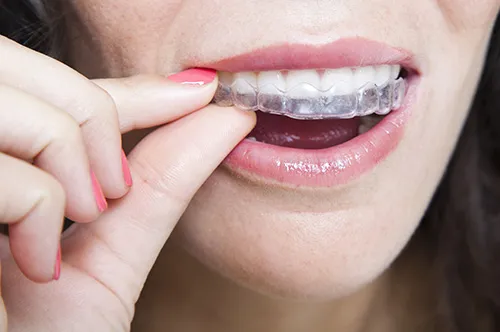
Invisalign takes a completely different approach. Instead of brackets and wires, this system uses a series of custom-made clear plastic trays called aligners. Each set of aligners is designed to make small, precise movements. You wear one set for about two weeks, then switch to the next set in the series. The aligners are nearly invisible when worn, which is why many adults and teens prefer them.
Both treatments address the same types of concerns. Crooked teeth, gaps, crowding, overbites, underbites, and crossbites can all be corrected with either option. The goal is the same: a healthy, confident smile that looks great and functions properly.
Braces in their modern form have been used for over a century. Invisalign received FDA clearance in 1998 and became commercially available in 1999. It has continued to improve with advances in 3D scanning and aligner technology. Millions of customers worldwide have been treated with Invisalign. According to the American Association of Orthodontists, both treatments are considered effective for most orthodontic cases when supervised by a trained orthodontist.
The right choice depends on several factors. How involved is your case? How disciplined are you about wearing removable appliances? What matters most to you during treatment? A board-certified orthodontist can help you weigh these questions and find the best fit.
How Does Each Treatment Work? The Process Explained
Metal braces use fixed brackets bonded to teeth, connected by archwires that apply steady pressure over months. Invisalign uses a series of removable clear plastic aligners changed every one to two weeks at home. Both gradually shift teeth into alignment, but braces require in-office adjustments while Invisalign relies on customer compliance with wearing each new tray.
How Do Metal Braces Work?
Bonding kicks off the process. Your orthodontist attaches small metal brackets to the front surface of each tooth using a special dental adhesive. These brackets serve as anchors for the archwire, which threads through each bracket and connects your entire smile.
Here’s the key: the archwire does the heavy lifting. Made from a flexible metal alloy that “remembers” its shape, it constantly tries to return to its original form when bent to fit your current tooth positions. That steady, constant pressure is what gradually shifts teeth into place. Slow? Yes. Effective? Absolutely.
Expect to visit the office every four to eight weeks for adjustments. During these appointments, your doctor may:
- Replace the archwire with a thicker or differently shaped wire
- Adjust the tension on specific teeth
- Add or remove elastic bands to address bite issues
- Check your progress and modify the treatment plan if needed
Average treatment time with braces ranges from 12 to 36 months. Simple cases might wrap up faster, while cases with significant bite correction often take longer.
How Does Invisalign Work?
Invisalign begins with a digital 3D scan of your teeth. This scan creates a precise model that your orthodontist uses to plan the full treatment sequence. You can often see a simulation of how your teeth will move before you even begin.
Based on this plan, a series of custom aligners is fabricated. Each aligner is slightly different from the last, designed to make specific movements. You wear each set for one to two weeks, then move to the next tray in the sequence.
For the treatment to work properly, the aligners must be worn 20 to 22 hours per day. Remove them only for eating, drinking anything other than water, and brushing your teeth. Office visits are typically less frequent than with braces, often every six to ten weeks.
Treatment time with Invisalign generally ranges from 6 to 18 months for mild to moderate cases. More involved situations may take longer or may be better suited for braces.
What Happens After Active Treatment?
Both options require a retention phase. Once your teeth reach their final positions, you’ll wear retainers to keep them in place. Without retention, teeth can gradually shift back toward their original positions. Most orthodontists recommend wearing retainers nightly for life to protect your investment.
Benefits of Invisalign vs Benefits of Traditional Braces
So which treatment gives you more bang for your buck? That depends on what you value most. Invisalign offers discreet appearance and removability, while braces provide stronger control for involved cases. Our team at 360 Orthodontics in Los Angeles finds that customers who value discretion and flexibility tend to prefer Invisalign, while those with more involved cases lean toward braces.
Why Do Customers Choose Invisalign?
Nearly invisible appearance. The clear plastic aligners blend in with your teeth. Most people won’t notice you’re wearing them unless they look closely. This makes Invisalign popular among adults and teens who feel self-conscious about a mouth full of metal.
Removable for eating and oral hygiene. You take the aligners out before meals, so there are no food restrictions. Popcorn, apples, corn on the cob, eat what you love. Brushing and flossing remain simple because nothing is attached to your teeth.
Improved comfort. Smooth plastic edges don’t irritate cheeks and lips the way brackets sometimes can. Pressure from new aligners feels different from wire tightening, and many customers describe it as more tolerable. Fewer office visits are another perk. Since you change aligners at home on a set schedule, you don’t need as many in-person adjustments. This works well for busy lifestyles.
Predictable treatment visualization. The 3D treatment plan lets you see your expected results before starting. You know exactly what you’re working toward.
Why Do Customers Choose Metal Braces?
There are strong reasons customers still choose metal braces, and they go beyond tradition.
- Effective for involved cases. Severe crowding, large gaps, significant rotations, and bite issues that need precise control often respond better to braces. Your orthodontist has more direct control over tooth movement with brackets and wires.
- No compliance concerns. Braces work around the clock because they’re fixed to your teeth. You can’t forget to wear them or take them out too often. For customers who might struggle with the discipline Invisalign requires, this is a real advantage.
- Multiple style options. Beyond traditional metal, you can choose clear braces made from ceramic materials. These blend in better while still providing the effectiveness of fixed appliances.
- Often lower cost. In many cases, braces come with a lower price tag than Invisalign. This makes them accessible to more families, especially across the Los Angeles area where orthodontic costs can add up quickly.
- Time-tested reliability. With over a century of use, braces have a long track record of success for virtually every type of orthodontic case.
What Benefits Do Both Treatments Share?
- Permanent results when followed by proper retention
- Straighter teeth that are easier to clean, leading to better oral health overall
- Bite function improves, reducing jaw stress and uneven wear
- Smile with confidence in photos, at work, and in everyday life
Invisalign vs Braces: A Side-by-Side Comparison Across Cost, Comfort, Appearance, and Treatment Time
Here’s how they compare side by side.
| Factor | Invisalign | Frenos Metálicos |
|---|---|---|
| Appearance | Nearly invisible clear plastic | Visible metal brackets and wires |
| Removability | Removable for eating and brushing | Fixed to teeth throughout treatment |
| Treatment Time | 6-18 months (mild to moderate cases) | 12-36 months (all case types) |
| Office Visits | Every 6-10 weeks | Every 4-8 weeks |
| Food Restrictions | None | Avoid hard, sticky, and chewy foods |
| Oral Hygiene | Normal brushing and flossing | Requires special techniques and tools |
| Comfort | Smooth plastic, mild pressure | May irritate cheeks; soreness after adjustments |
| Best For | Mild to moderate alignment issues | Involved cases and severe malocclusion |
| Daily Wear Requirement | 20-22 hours per day | Always on |
| Compliance Needed | High (customer must wear aligners) | Low (braces do the work automatically) |
How Do They Differ in Appearance and Lifestyle Impact?
If discretion matters to you, Invisalign wins. The aligners are hard to spot from a conversational distance. Metal braces are visible, though ceramic clear braces offer a middle ground. For lifestyle flexibility, Invisalign also has the edge. No foods are off-limits, and you can remove the aligners for special occasions, important meetings, or photos. Just remember to put them back in promptly.
Which Is More Effective for Different Cases?
A board-certified orthodontist at 360 Orthodontics can apply precise force in specific directions using the bracket and wire system. That’s why braces handle severe crowding, large gaps, and involved bite issues more predictably. Invisalign works well for mild to moderate cases. Spacing issues, minor crowding, and certain bite concerns respond well to aligner treatment. The technology has improved significantly, and Invisalign can now treat more cases than ever before. Still, some situations call for braces. Your orthodontist will tell you honestly which option gives you the best shot at great results.
Which Is More Comfortable?
Braces often cause more soreness, especially after adjustments. Brackets can rub against the inside of your cheeks, and wires may occasionally poke. Orthodontic wax helps, but there’s a learning curve. Invisalign pressure tends to feel milder. New aligners create tightness for the first day or two, then the sensation fades. Smooth plastic rarely irritates soft tissue. Most customers adapt to either option within a few weeks.
How Does Maintenance Compare?
With braces, you’ll need to brush carefully around each bracket and thread floss under the wire. Special tools like interdental brushes and floss threaders make this easier. Skipping proper cleaning can lead to white spots on teeth or gum issues. Invisalign simplifies oral hygiene. Remove the aligners, brush and floss normally, clean the trays, and put them back in. It takes a bit of routine, but most customers find it straightforward.
How Much Do Invisalign and Braces Cost? Key Pricing Factors
Metal braces typically cost $3,000 to $7,000 for full treatment, while Invisalign generally falls between $3,000 and $8,000. Actual cost depends on case complexity, treatment duration, geographic location, and provider experience. Most dental insurance plans cover both options equally.
These ranges overlap significantly, and many customers find the costs comparable. Several factors influence your specific price:
- Case complexity: More severe alignment issues require longer treatment and more materials, increasing cost.
- Treatment duration: Longer treatment means more appointments and, for Invisalign, more aligner sets.
- Geographic location: Prices vary by region. In Southern California, for example, orthodontic fees can differ from office to office depending on the area.
- Provider experience: Board-certified orthodontists with advanced training may charge more, but their expertise often leads to better outcomes.
Does Insurance Cover Orthodontic Treatment?
Most dental insurance plans with orthodontic benefits cover both braces and Invisalign equally. The coverage amount varies by plan but often ranges from $1,000 to $3,000 toward treatment. Check with your insurance provider to understand your specific benefits.
Are Payment Plans Available?
At 360 Orthodontics, we believe a straighter smile should be affordable for every family. We offer easy payment plans and transparent, all-inclusive pricing so you know exactly what you’re paying before treatment begins. No hidden fees or surprise costs. During your free consultation, our team walks you through every pricing detail so there are no surprises down the road.
How Do I Get an Accurate Estimate?
The best way to know what your treatment will cost is to schedule a free consultation. During this visit, your orthodontist examines your teeth, discusses your goals, and provides a personalized treatment plan with clear pricing. You’ll know exactly what to expect before making any decisions. Our Los Angeles offices make it easy to find a convenient time and location.
Who Is a Good Candidate for Invisalign vs Braces?
Invisalign works best for customers with mild to moderate alignment issues who can commit to wearing aligners 20 to 22 hours daily. Braces are better for severe crowding, involved bite issues, and customers who prefer a fixed appliance. Not everyone is suited for every treatment, so here’s how to think about which option might work best for your situation.
Who Is an Ideal Candidate for Invisalign?
Customers with mild to moderate orthodontic concerns and strong daily habits tend to do best with Invisalign. It could be a great fit if you have:
- Mild to moderate crowding or spacing issues
- Minor bite concerns like a slight overbite or underbite
- Good oral hygiene habits
- The discipline to wear aligners 20-22 hours daily
- A preference for a discreet treatment option
- A lifestyle that benefits from removable appliances
Adults and teens often thrive with Invisalign. The key is commitment. Leaving your aligners out too often or losing track of them means the treatment won’t work as planned. Our orthodontists are upfront about this during your free consultation.
Who Is an Ideal Candidate for Metal Braces?
Customers who need significant tooth movement or precise bite correction are often better candidates for braces. Braces may be the better choice if you have severe crowding, significant gaps, or bite issues requiring precise control. Teeth that need significant rotation also tend to respond better to brackets and wires.
Beyond the clinical side, braces work well for customers who don’t want to worry about compliance. The brackets stay on regardless of how busy or forgetful life gets, making them a true “set it and forget it” option. They’re also the right call for customers working with a tighter budget, since braces sometimes come in at a lower price point. Younger teens often do well with braces for exactly these reasons.
Can Children Get Invisalign or Braces?
Children with baby teeth still present typically aren’t candidates for either full treatment yet. But some kids benefit from Phase 1 treatment (early interceptive treatment) to guide jaw growth and create space for incoming permanent teeth. A healthy smile starts early. After Phase 1, they may need a second phase with braces or Invisalign once more adult teeth have erupted. Our team can evaluate your child’s needs and recommend the right timing for treatment.
How Does an Orthodontist Determine the Best Option?
Only an orthodontist can accurately assess which treatment will give you the best results. They consider factors you might not think about, like the position of your tooth roots, the density of your bone, and how your jaw joints function.
Our orthodontists at 360 Orthodontics take the time to evaluate each customer thoroughly. We explain your options honestly, including the pros and cons of each approach for your specific case. That honest conversation is where the best treatment decisions start. With offices across Southern California, getting a professional evaluation is simple and convenient.
Frequently Asked Questions About Invisalign and Braces
Is Invisalign Faster Than Braces?
Invisalign is often faster for mild to moderate cases, typically finishing in 6 to 18 months compared to 12 to 36 months for braces. More involved situations requiring significant tooth movement may take longer with either option. Your orthodontist can give you a realistic timeline based on your specific situation.
Can You Switch From Braces to Invisalign Mid-Treatment?
Sometimes. If your treatment is progressing well and your remaining corrections are suitable for aligners, your orthodontist may approve a switch. This isn’t common, but it’s possible in certain circumstances. Bring it up during your free consultation if flexibility matters to you.
Do Braces Hurt More Than Invisalign?
Think of it this way: braces create more friction. Brackets can irritate the inside of your mouth, and adjustment appointments often bring a day or two of soreness. With Invisalign, new aligners do create tightness initially, but the pressure tends to feel milder overall. Everyone’s tolerance differs, but most customers adapt to either option within a few weeks. Also worth noting: with braces, you’ll need to avoid hard foods like nuts and popcorn kernels, sticky foods like caramel and taffy, and be careful with chewy foods like bagels. Invisalign has no food restrictions since you remove the aligners to eat.
Is Invisalign as Effective as Braces?
For most orthodontic cases, yes. Braces remain the most reliable choice for severe malocclusion, significant rotations, and involved bite corrections. The American Association of Orthodontists recognizes both as valid treatment options when used appropriately. Your orthodontist will recommend whichever gives you the best chance at a great result.
How Do I Know Which Is Right for Me?
Schedule a free consultation with an orthodontist. During this appointment, you’ll receive a thorough examination, discuss your goals and concerns, and learn which option best fits your needs. Our team at 360 Orthodontics takes the time to explain everything clearly so you can make a confident decision.
Can Adults Get Braces or Invisalign?
Absolutely. More adults are pursuing orthodontic treatment than ever before. Both braces and Invisalign work well for adult orthodontics customers. Invisalign’s discreet appearance makes it especially popular among working professionals in Los Angeles and across Southern California, but plenty of adults choose braces too. Age is rarely a limiting factor, and our orthodontists see adult customers every day at our offices throughout the region.
If aligners are the better match for your case, here is how we approach Invisalign in Santa Ana.
 ES
ES  EN_US
EN_US